
The Complete History of the Golf Bag
The golf bag has a more fascinating history than most golfers realize. What started as a simple bundle of sticks tied with twine has evolved over six centuries into a precision-engineered carry system weighing under 3 lbs with GPS holders, USB charging ports, and waterproof construction. This is the story of that evolution — told by a golfer who has lived through several decades of it personally.
💡 Personal Note: I've been playing golf for over 60 years and have attended the Ryder Cup and Mercedes Championships in person. The evolution of equipment — including bags — over that time has been extraordinary to witness firsthand.
The Full Timeline
Golf originates on the wind-swept links of Scotland. No bags existed. Golfers carried clubs loose under their arm or bound them together with twine or cord and hauled them across the course on foot. Caddies — young boys hired to carry clubs — were essentially human golf bags for wealthy players.
The first true golf bags appear — narrow canvas tubes reinforced with metal ends, standing 34–35 inches tall with a 4.4-inch opening. Called "pencil bags" for their slim cylindrical shape, they held a handful of clubs with no pockets, no strap, and no stand. Golfers carried them by hand or gave them to a caddie. This basic design remained largely unchanged until the 1930s.
American inventor James Herbert Winslow patents one of the first golf bags with a dedicated second compartment — the direct ancestor of the multi-pocket bags sold today. The golf establishment was initially skeptical of this "unnecessary complexity," but golfers quickly appreciated having a separate space for balls and tees.
Golf bags become symbols of social standing. Premium bags are custom-crafted by skilled British leatherworkers with hand-tooled monograms, polished brass hardware, and bespoke color combinations. The quality of your golf bag signals your place in society as clearly as your club membership. Scottish and English leather goods houses that made bags for royalty command waiting lists of months.
The USGA officially limits golfers to 14 clubs during competition — the rule that has defined the size, organization, and design of every golf bag made since. Before this rule, golfers carried as many clubs as they wanted — some professional players carried 20+ clubs. The rule standardized bags around a 14-club capacity that remains universal today.
The electric golf cart is introduced commercially at golf courses across America. Within a decade riding carts are standard at most US courses. The cart bag category is born — larger, heavier vinyl and canvas bags designed for storage rather than carrying. By 1960, visionary promoter George May replaces caddies at his Tam O'Shanter course with electric carts, sparking a national shift toward riding that permanently changes golf bag design.
San Jose golf entrepreneur Rick Reimers studies backpack manufacturers — not golf equipment companies — and borrows their lightweight nylon construction techniques. The result is a golf bag weighing less than half of anything previously available. Reimers founds Sun Mountain Sports, which becomes the defining company in golf bag innovation for the next half century. The era of the 8 lb canvas bag begins its slow end.
Sun Mountain creates the first golf bag with built-in retractable legs — the ECLIPSE®. The legs deploy automatically when the bag is set down and retract when lifted. Golf equipment professionals widely consider this the single greatest innovation in modern golf bag history. Every major bag manufacturer immediately follows with their own stand bag designs. Walking golf is transformed overnight.
T.J. Izzo patents the IZZO Dual Strap System — two shoulder straps that distribute bag weight evenly across both shoulders. The USGA's technical director ranks it the 4th greatest innovation in modern golf, behind only graphite shafts, the modern golf ball, and metal woods. Every quality stand bag produced today uses a version of this system. The era of the painful single-strap carry bag effectively ends.
PGA Tour bag branding becomes a major marketing battleground. Staff bags displayed on tour are walking billboards — players are paid significant sums to carry specific brand bags. Titleist, Callaway, TaylorMade, and PING compete intensely for tour visibility. The touring staff bag — large, square-topped, and logo-covered — becomes the aspirational product that drives recreational sales worldwide.
Bag design fragments into highly specialized categories. Cart bags grow to 15+ pockets with insulated cooler compartments, velour-lined valuables pockets, and umbrella holders. Carry bags shed weight aggressively — Sun Mountain's 2001 Superlight weighs just 2.5 lbs. The hybrid bag category emerges for golfers who alternate between walking and riding. Travel bags add rigid frames, retractable handles, and airline-friendly wheeled bases.
Sun Mountain introduces the H2NO — the first fully waterproof golf bag. Despite golfers playing in rain for over 500 years, complete waterproofing in a golf bag is a 21st century innovation. Prior to this, rain covers were the only protection available. The H2NO uses fully waterproof zippers, sealed seams, and water-resistant fabrics throughout.
Golf bags begin integrating technology. GPS holder pockets appear on carry bags. Rangefinder attachment clips become standard accessories. Bluetooth speaker attachments gain popularity. Some premium bags add USB charging ports for phones. The golf bag transforms from simple equipment carrier to integrated gear management system.
The ultralight movement pushes carry bag weights below 2 lbs for Sunday bags and below 3.5 lbs for full-featured stand bags. Sustainable materials enter the market — recycled fabrics, bio-based materials, and reduced-waste manufacturing processes. Some manufacturers introduce bags made partly from recycled plastic bottles. The electric push cart revolution makes heavy cart bags practical for walking golfers who want maximum storage without carrying the weight.
Today's golf bags are the most technically sophisticated ever made. Ultralight frames under 2 lbs, weatherproof zippers rated for thousands of cycles, full-length divider systems that eliminate club tangling entirely, integrated GPS holders, USB charging, insulated coolers, and hip-belt weight transfer systems borrowed from mountaineering packs. The golf bag has come a full circle — from the premium handcrafted leather bags of the 1920s to premium handcrafted technical bags of the 2020s, both representing the pinnacle of their era's materials and craftsmanship.
Key Innovations That Changed Golf Bags Forever
📜 1939 — 14-Club Rule
Standardized bag size for all time. Every bag made since is designed around holding exactly 14 clubs.
🎒 1970s — Lightweight Nylon
Sun Mountain's backpack-inspired construction cut bag weight by more than half and made walking golf genuinely enjoyable.
🦵 1986 — Stand Legs
Sun Mountain's ECLIPSE changed walking golf permanently. The self-standing bag is now so standard it's hard to imagine bags without it.
👜 1991 — Dual Strap
Izzo's dual shoulder strap patent — ranked 4th greatest golf innovation ever by the USGA — eliminated the primary physical burden of carrying a golf bag.
💧 2007 — Full Waterproofing
500 years of playing in rain, and complete waterproofing only arrives in the 21st century. The H2NO proved that fully sealed bags were both possible and practical.
⚡ 2010s — Tech Integration
GPS holders, charging ports, and Bluetooth speakers turned the golf bag from a simple carrier into an integrated tech platform for the modern golfer.
Top Picks on Amazon
Hand-picked recommendations available on Amazon with current pricing.

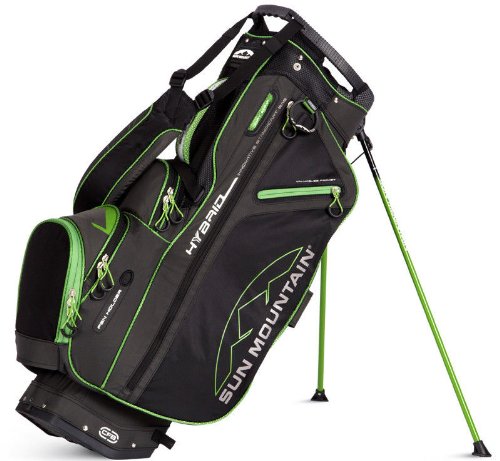
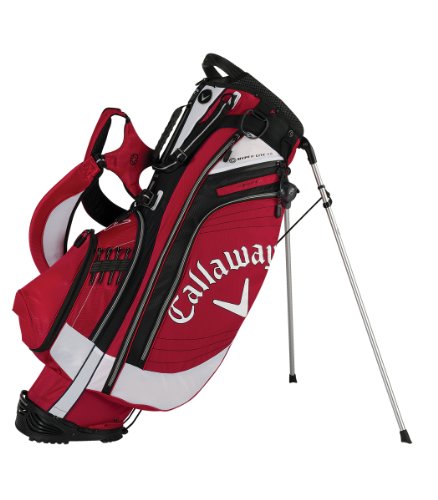
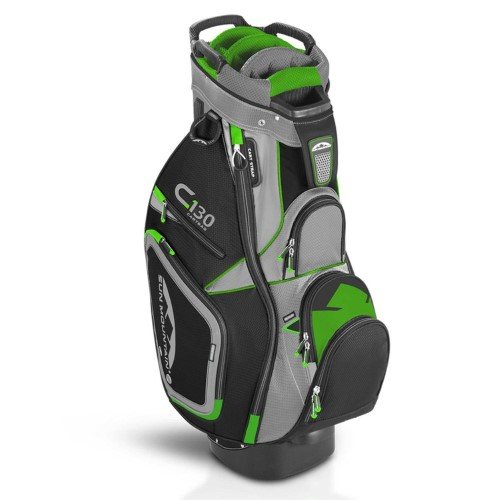
As an Amazon Associate I earn from qualifying purchases. Prices shown on Amazon at time of purchase apply.